Home › Road, Street, and Municipal Paving
Partner with a dependable contractor for road paving in Columbus, OH. We build and resurface asphalt streets for municipalities, neighborhoods, and private developments. Our team handles grading, base work, paving, and traffic control to keep projects on schedule and within budget.
Precision Asphalt Columbus provides professional road paving throughout Columbus, OH, Ohio and the surrounding area. Our licensed, insured crew delivers safe, clean, on-time work with a free estimate before anything begins. Call (614) 907-4859 or request your free quote.
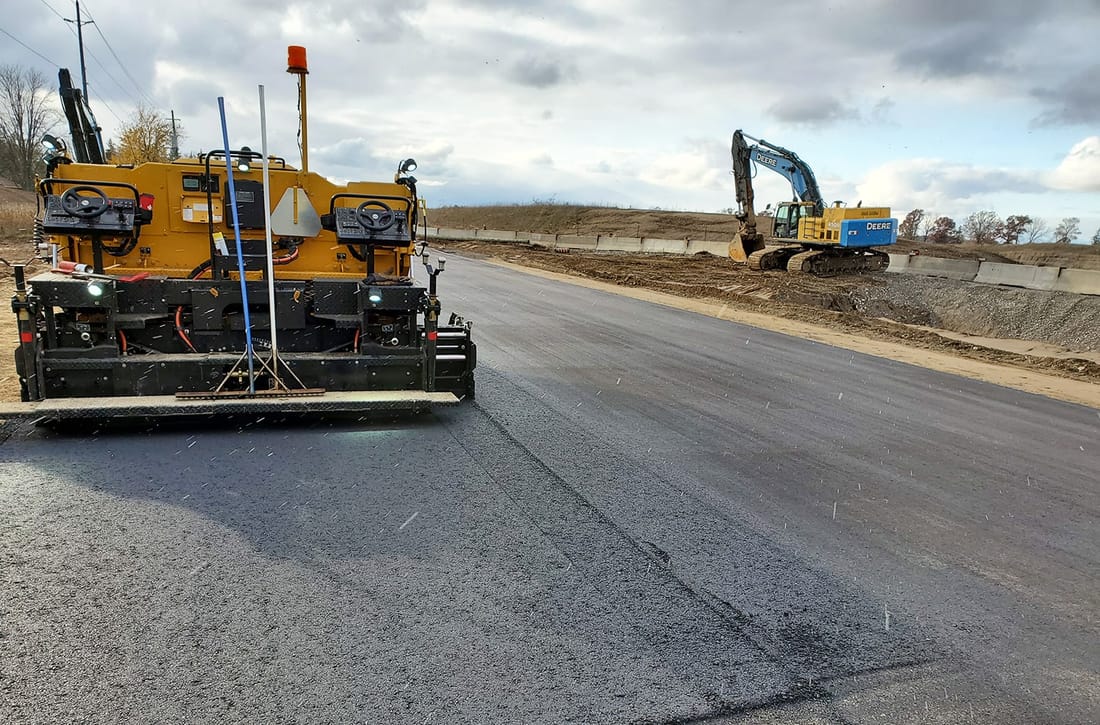
Road, Street, and Municipal Paving in Columbus, Ohio
Columbus roads see a tough mix of freeze-thaw cycles, heavy commuter traffic, and constant utility work. Precision Asphalt Columbus focuses our road paving approach on what actually holds up in central Ohio, not what looks good for a month and then ruts out.
When we talk about road, street, and municipal paving, we mean everything from neighborhood streets off Morse Road, to industrial access drives near Rickenbacker, to small city-owned parking lots and alleys in older core neighborhoods like Clintonville or Franklinton. Each of these needs different pavement thicknesses, drainage planning, and traffic control. We walk your route, look at what is failing now, and design a paving section that actually fits the soil, traffic loads, and budget.
Because we work primarily in Columbus and the surrounding suburbs, we are used to tying into existing city infrastructure. That means clean joints at existing asphalt and concrete, properly raising manholes and catch basins, and meeting local standards so inspectors can sign off quickly. Our goal on street work is simple: keep traffic moving safely, protect your base, and give you a surface that will last more than just a few winters.
How Our Road Paving Process Works, Step by Step
Good road paving in Columbus starts underneath the asphalt. We begin with a detailed site visit to check for soft spots, drainage issues, and existing utility patches. On older streets, especially in neighborhoods with 1950s and 1960s housing stock, we often find thin asphalt laid directly over clay. In those cases, we recommend milling deeper or rebuilding the base so you are not just hiding the problem under a new surface.
1) Milling or excavation: For resurfacing, we use a milling machine to grind off a set depth of the existing asphalt, typically 1.5 to 3 inches depending on the design. On full reconstructions or new streets, we excavate to the required subgrade and compact the soil. If we hit weak clay or organic material, we remove it and replace it with stone.
2) Base installation: We typically install a compacted aggregate base using ODOT-approved 304 or 411 stone. For municipal streets that see heavier trucks, we specify thicker base layers and may add stabilization fabric in areas with poor subgrade. Compaction is verified with multiple roller passes and, when specified, density testing.
3) Binder course: The first lift of asphalt is usually a heavier, coarser mix known as the binder course. This is what carries the structural load of cars, buses, and delivery trucks. Thickness can range from 1.5 to 3 inches or more depending on traffic counts and local requirements.
4) Surface course: The final lift is a finer asphalt mix that gives you a smooth, even ride. For collector and municipal streets in Columbus, we often use a 9.5 mm surface mix that balances skid resistance and durability. We pay close attention to tie-ins at driveways, side streets, and ADA ramps so there are no awkward humps or dips.
5) Compaction and finishing: Each lift of asphalt is compacted while it is still hot using steel drum and pneumatic rollers. Proper compaction is critical in Ohio because under-compacted pavements take on water and break apart in winter. We finish by checking cross slopes for drainage, cleaning joints, and applying joint sealant where specified.
Pavement Design Choices for Columbus Streets
Different roads in Columbus have very different needs, which is why Precision Asphalt Columbus does not use a one-size-fits-all paving section. We look at three main design factors: traffic loading, subgrade strength, and drainage.
On low-volume residential streets in areas like Hilliard, Gahanna, or Grove City, a typical design might be a compacted stone base with a 2 inch binder course and a 1.5 inch surface course. Where school buses or trash trucks regularly travel, we may increase the binder thickness or specify a slightly stiffer asphalt mix to resist rutting.
On busier collector roads or industrial streets serving warehouses and semis, we increase total asphalt thickness and often upgrade the base. In some cases, we will recommend a full-depth asphalt design (all asphalt, no stone base) that performs better over Columbus clay soils, especially where the water table is higher. We can also coordinate with your engineer to match or adapt an ODOT or City of Columbus standard section.
Drainage design is just as important as material choice. We set crown and cross slope so water sheds to the gutter line instead of ponding in the wheel path. In older areas where curbs have settled or gutters do not drain, we may suggest modest grade adjustments during paving so the new surface actually works with, not against, existing storm inlets.
We also plan around utility structures. Columbus streets are full of manholes, valve boxes, and catch basins. Before paving, we locate and mark them all. During milling and paving, we protect structures, then raise them to the new finished grade using collars or brick, and finish around them with tight joints to avoid early cracking.
What Drives Cost and How We Help Control It
Road paving budgets are always under pressure, especially for HOAs, small municipalities, and private street owners. Precision Asphalt Columbus takes time to explain what is driving your numbers so you can make informed tradeoffs.
Project size and layout: Long, uninterrupted stretches of road are more efficient to pave than short segments with frequent intersections, speed tables, or tight cul-de-sacs. Mobilizing heavy equipment for a single block typically costs more per square yard than a multi-block or multi-street project. When possible, we help you bundle work to improve unit pricing.
Depth and structure: More asphalt and thicker base cost more, but under-building a road in Columbus usually shows up as alligator cracking and potholes within a few winters. Where budgets are tight, we might suggest phasing the work (high-priority streets first) or adjusting which layers are thickened so you get the best life cycle for the dollars you have.
Existing conditions: Milling off a smooth but aged surface and replacing it is straightforward. Fixing a road with deep ruts, wide cracks, or severe base failures involves more patching, base repair, and sometimes underdrain installation. We walk the route with you and mark out areas that truly require extra work so you can see where costs are coming from.
Traffic control and scheduling: Maintaining access in busy areas around OSU, downtown, or commercial corridors can require extensive signage, flaggers, and night or off-peak work. We coordinate phasing, detours, and notifications to residents or tenants so everyone knows when lanes will be closed and when access will be restored. Efficient traffic control shortens the project and reduces disruption, which usually saves money overall.
Common Road Issues in Columbus and How We Address Them
Central Ohio roads fail in predictable ways, and understanding those patterns helps us design longer lasting fixes. Precision Asphalt Columbus sees three main problems: cracking from freeze-thaw movement, rutting from repeated heavy loads, and edge failures where asphalt meets grass or gravel.
Cracking and potholes: Water finds its way into small cracks, then expands when it freezes. We combat this with proper compaction, good joint construction, and mix designs that are not overly stiff or brittle. When resurfacing streets with existing cracks, we clean and fill structural cracks, then either mill deep enough to remove them or install an intermediate leveling course so they are less likely to reflect through the new surface.
Rutting and shoving: Bus routes, distribution areas near I-270, and streets leading to industrial parks often show wheel path depressions. In these zones, we may increase binder thickness, use mixes with higher stone content, or consider full-depth reconstruction of the wheel paths. Proper base preparation is key, since no amount of surface mix can compensate for a pumping or yielding base.
Drainage and edge failures: In many Columbus subdivisions, grass or gravel shoulders sit right at pavement edge. Water saturates those edges and traffic breaks them down into crumbling chunks. We address this by shaping shoulders, tightening up edge compaction, and, when possible, installing a small wedge or berm to keep water moving away from the pavement.
Before you hire any road paving contractor in Columbus, ask how they assess base conditions, what mix designs they propose for your traffic, and how they plan to manage manholes, inlets, and drive entries. A detailed, job-specific plan that answers those questions is a good sign you are dealing with a company that understands real-world road performance in our climate. If you want that level of detail, Precision Asphalt Columbus is ready to walk your roads with you and lay out a clear, practical path from rough pavement to a smooth, durable surface.